English
 Arabic
 Chinese (Simplified)
 Dutch
Dutch French
 German
 Italian
 Portuguese
 Russian
 Spanish

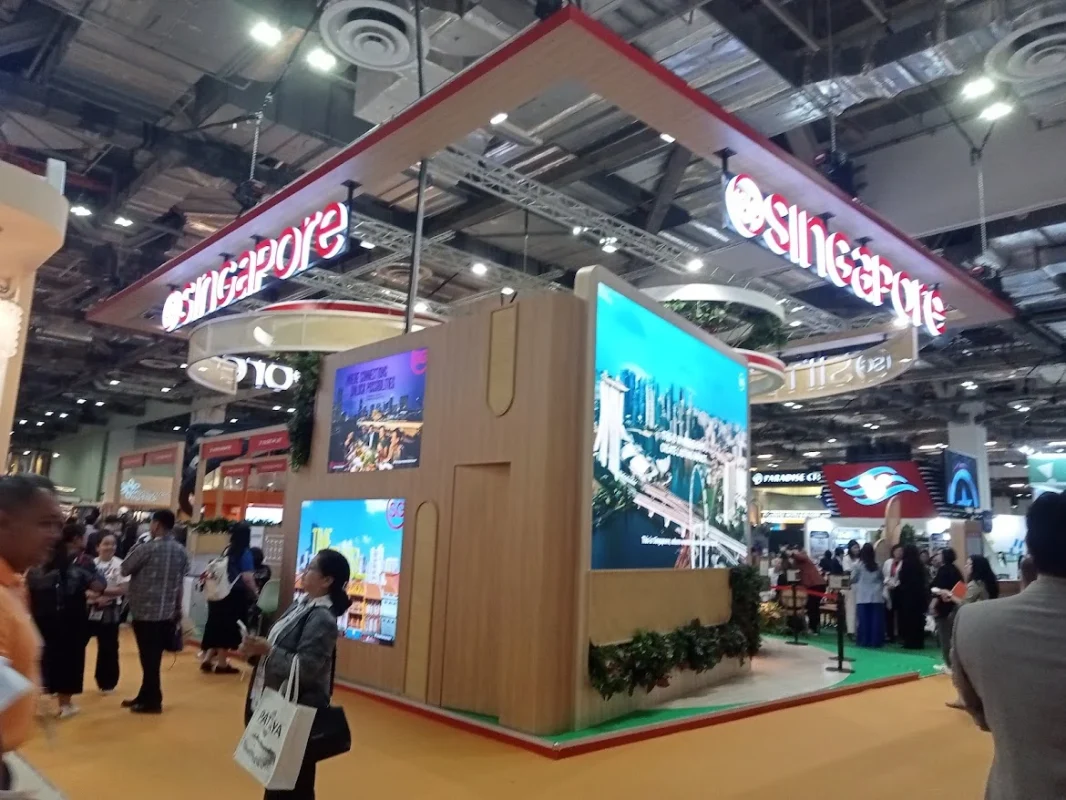
The publish Technology, Adventure, and the Human Touch: Points to Ponder from ITB Asia 2025 appeared first on TD (Travel Daily Media) Travel Daily Media.

ITB Asia 2025, the annual occasion’s largest version but, drew to a profitable conclusion on Friday, seventeenth October.
We at Travel Daily Media had the alternative to cowl the occasion all through its three-day run, sitting in on periods headlined by a few of the main thinkers in world journey and tourism.
Likewise, making our method via the intensive exhibition that occupied two flooring of the Sands Expo and Convention Centre enabled us to see related traits at the moment shaping the business, in addition to people who stand to change the sport down the line.
In at the moment’s characteristic, we share a few of the concepts which can be at the moment turning heads and making those that matter sit up and take discover as change takes maintain all through journey, tourism, and hospitality in Asia and past.

A devoted space for startups enabled emergent builders to meet with delegates
Travel expertise is evolving at a a lot sooner charge than we expect
It was inevitable that the use of synthetic intelligence and large knowledge could be touched upon in key discussions all through ITB Asia.
However, different corporations specialising in journey tech additionally showcased their experience at the occasion, their choices operating the gamut from AI-driven real-time translation to the use of facial recognition as a safer different to commonplace fingerprint biometrics.
Likewise, corporations like AStation revealed to individuals the manifold makes use of of augmented and digital actuality in tourism, going past mere storytelling and into the realm of speculative tourism, serving as a possible sport changer that may give travellers entry to never-before-scene areas with out compromising the pure setting.

A rising variety of travellers from Asia and elsewhere are opting to journey solo to see and expertise extra of what they need
We are seeing the rise of free and unbiased travellers
In his speak Untethered Adventures on the remaining day of the convention, High-Yield Tourism’s Gary Bowerman additionally cited the ongoing rise in the variety of free and unbiased travellers (FITs) making their method via the world.
As he put it: “The biggest growth and the most important changes in key travel markets are coming in the independent sector. Young people, older people, middle aged people who want to travel their way.”
Indeed, it was notable how a number of journey businesses and OTAs collaborating at ITB Asia have been fast to reply to inquiries relating to choices for particular person travellers who would somewhat do their exploring solo than with tour teams, a gang of associates, and even their households.
Now, why is that this turning into a factor?
For starters, travelling solo allows particular person travellers to transfer at their very own tempo, unencumbered by a prescribed routine or schedule of actions.
Likewise, they will correctly concentrate on what they particularly need to see and what they need to do as opposed to pandering to the myriad necessities concerned in group journey.
As a consequence, tourism boards, journey businesses, OTAs, and even lodges are developing with promotions particularly concentrating on solo travellers to assist them make the most of their journeys.

Orange-helmeted vacationers zip via the streets of Ho Chi Minh City on one in all Vespa Adventures’ famed night time excursions of Saigon
We want to make the most out of experiential journey
One of the contemporary additions to ITB Asia was the inclusion of a selected Experience Zone that includes corporations providing a wide range of points of interest, together with zoos, cruises, and leisure.
Come subsequent 12 months, thanks to an agreement between Messe Berlin and TripAdvisor, this zone will increase right into a devoted pavilion targeted on experiential journey, with choices ranging from cultural immersion, gastronomy, in addition to well being and wellness.
But even now, effectively past the parameters of ITB Asia, we’re already seeing international locations embracing the precepts of experiential journey and providing immersive choices to vacationers.
Vietnam and Taiwan have this down pat, as we’ve seen in current familiarisation journeys: each international locations take travellers on immersive experiences in areas that won’t essentially be a part of the commonplace tourism expertise.
Vietnam attracts travellers’ consideration to its historical past because it invitations travellers to discover the tunnels in the city of Cu Chi to delve into how the Vietnamese individuals survived and even thrived all through the struggle years; to perceive the nuances of native delicacies at hands-on studying experiences in Ho Chi Minh City and Ho Tram; to strive their hand at conventional crafts like silk portray and pottery; and even perceive native flora and fauna via a go to to an arboretum in Vung Tau.
Taiwan just about goes alongside the identical strains, however steps up the sport by providing a more in-depth have a look at the nation’s city centres: not via its malls and extra frequent points of interest, however via its growing variety of MICE venues and amenities to attract potential shoppers; artists’ quarters the place travellers can see them at work and take dwelling part of the expertise; and museums that showcase the better of each conventional and up to date artwork.

Three years post-pandemic, there’s nonetheless a shortfall when it comes to workers in journey, aviation, and hospitality
Human assets stay a crucial problem
However, not all the information has been good at ITB Asia, notably the place human assets in journey and associated fields are involved.
A current report by ACI HR Solutions identified how the lack of workers has adversely affected operations in the meals and beverage sector, aviation, and hospitality.
Indeed, in his speak on the final day of the occasion, ACI chief government Andrew Chan remarked: “The industry has rebounded strongly, but there is still a severe talent shortage. If anyone has made some hires recently or is in the middle of some hires, you’re probably looking at some difficulties because, during COVID, the industry lost about 70 percent of staff as many had to move away from the industry just to find employment.”
Chan defined that, regardless of the ongoing restoration, not everybody who left journey and hospitality throughout the pandemic has returned to their posts; certainly, many have moved on to different unrelated sectors.
The publish Technology, Adventure, and the Human Touch: Points to Ponder from ITB Asia 2025 appeared first on Travel Daily Media.
Source link